Home/Campaigns

YmgyrchoeddCampaigns

Slow Food recognises the strong connections between people, planet, plate, politics and culture. Here is where we are pushing, and where we have been.

Out and about · Ar grwydr

Where we have been this year

Campaigning is mostly turning up: at the Senedd, in festival tents, behind a tasting table. Here is how three of this year’s days went.

September 2026 · Abergavenny Food Festival

Rare and forgotten: the Ark of Taste at Abergavenny

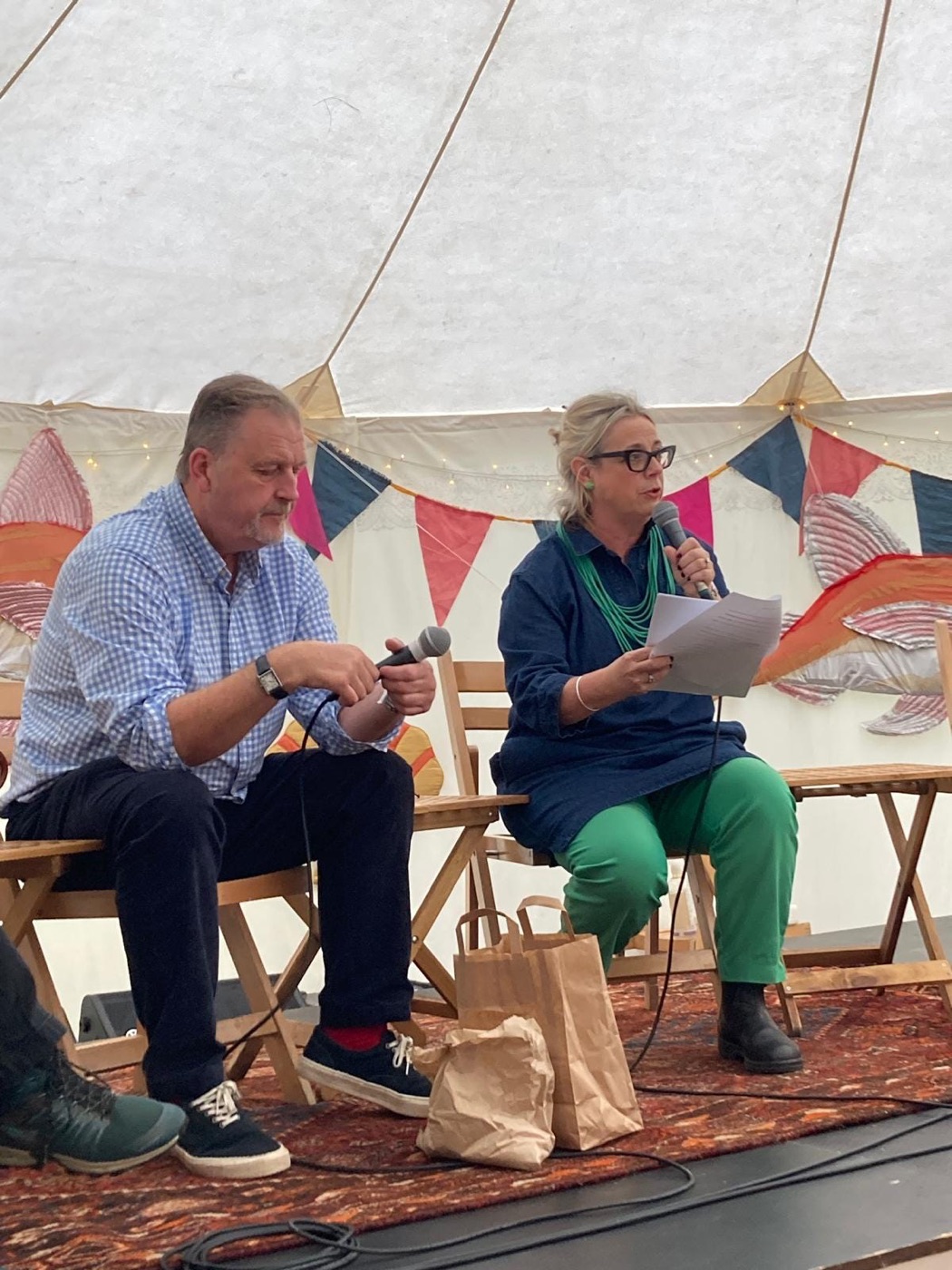
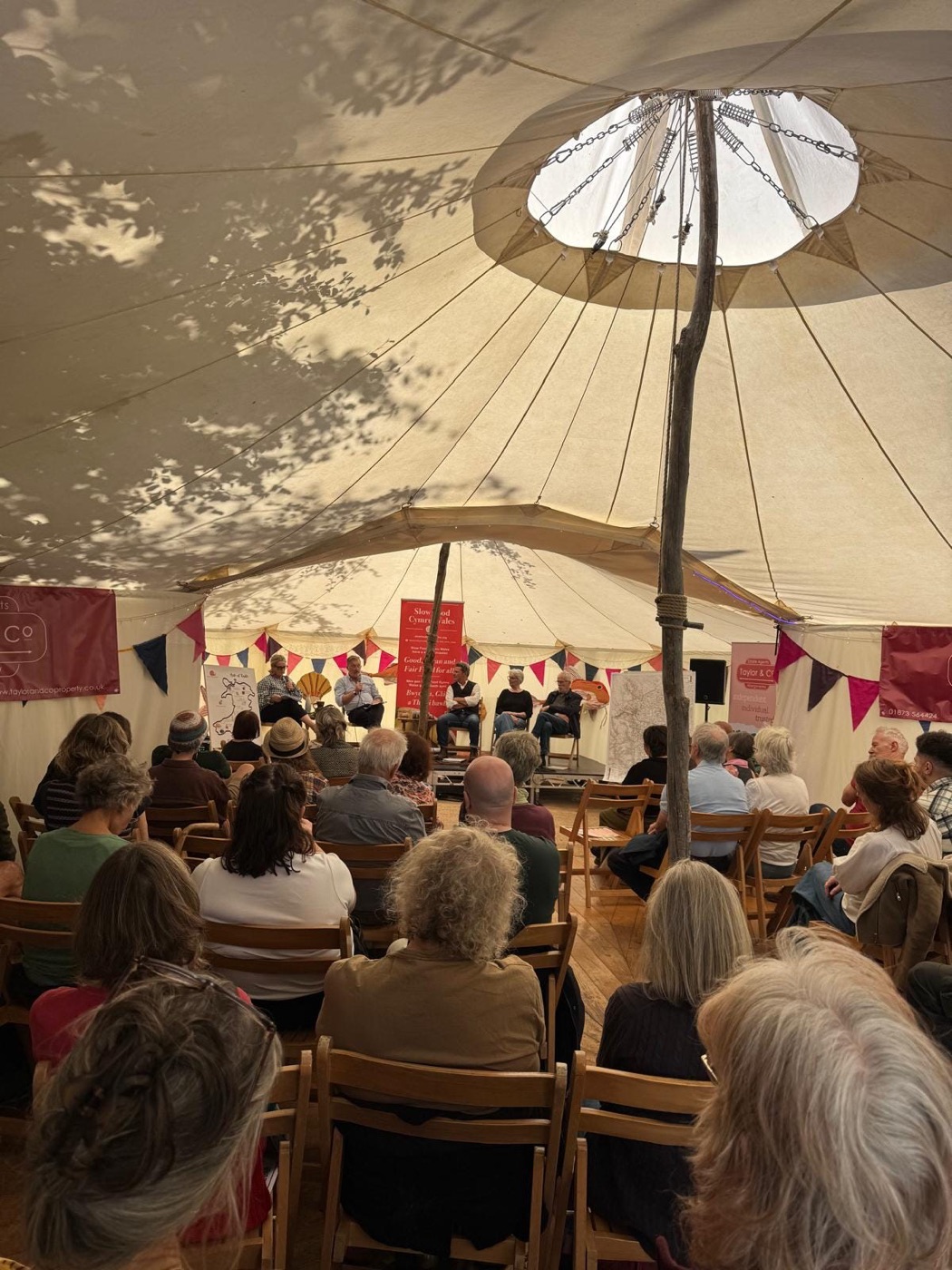
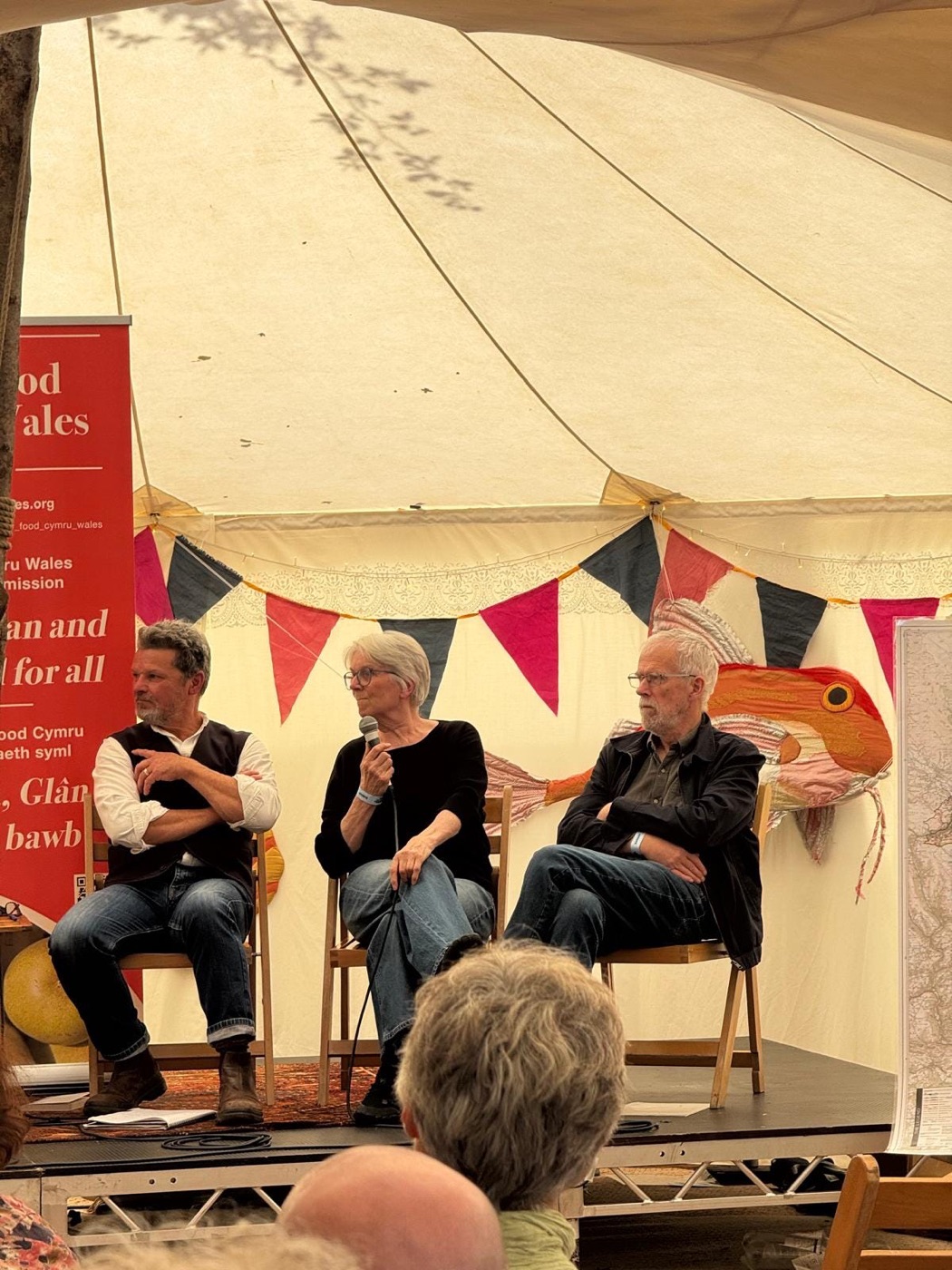
On the Local and Vocal stage, our chair Trine Hughes and Andrew Collings, who coordinates the Ark of Taste in Wales, talked about the Welsh foods in danger of disappearing and what it takes to keep them. Trine brought samples of two Ark beans: the District Nurse French bean, a lilac-flowered Cardiff heirloom that can be eaten young or dried for winter, and the Rhondda Black runner.

The message was the one the Ark always comes back to. A food survives by being grown, cooked and eaten, not by being written down.

The next day the team turned out in force for a session on Hen Gymro, the “Old Welshman”, a landrace wheat grown in Britain until the 1920s. Rob Penn, author of Slow Rise, and Anne and Andrew Parry of Felin Ganol watermill told the story of bringing it back, and the audience tasted Rob’s bread and Anne’s Hen Gymro biscuits.

Read Trine’s full account

24 May 2026 · Hay Festival, Creative Hub

A Taste of Wales at the Hay Festival

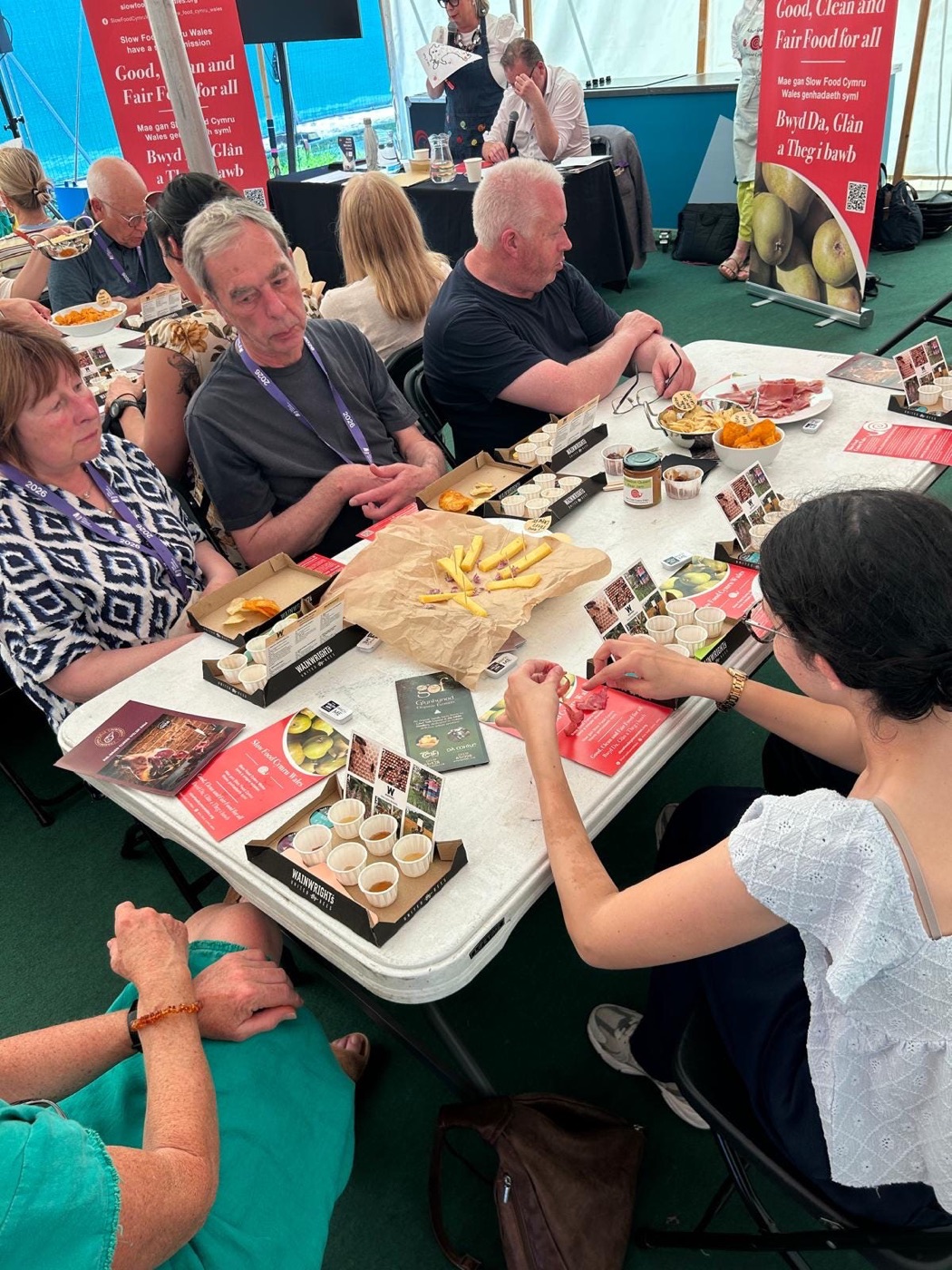
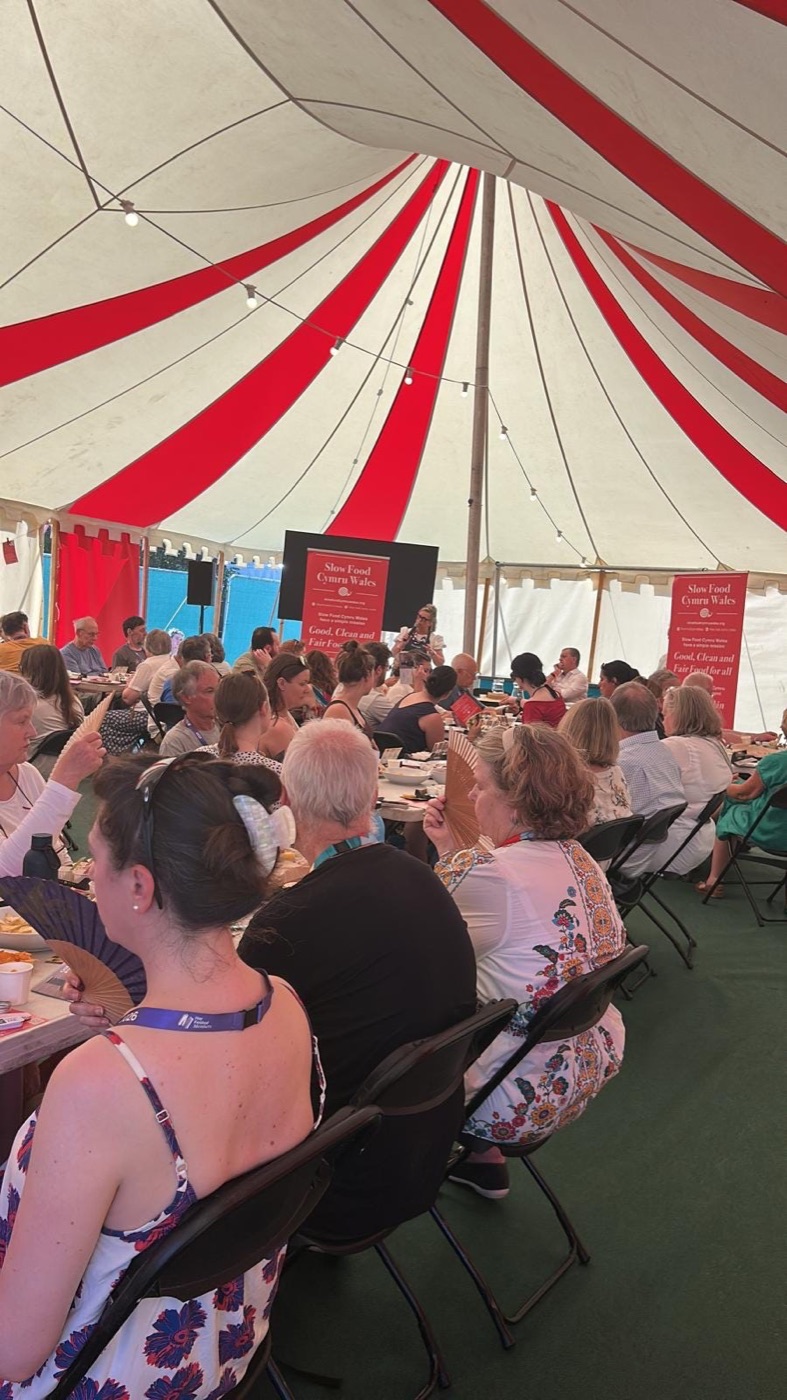
Sixty people crowded into a tent at the Hay Festival for Matters of Taste, our tasting session, in a tent that reached 32 degrees. Andrew Collings, Alison Lea-Wilson of Halen Môn and Trine Hughes walked them through the Slow Food movement, the Ark of Taste, the Welsh foods protected by their place of origin, and the part our business supporters play.

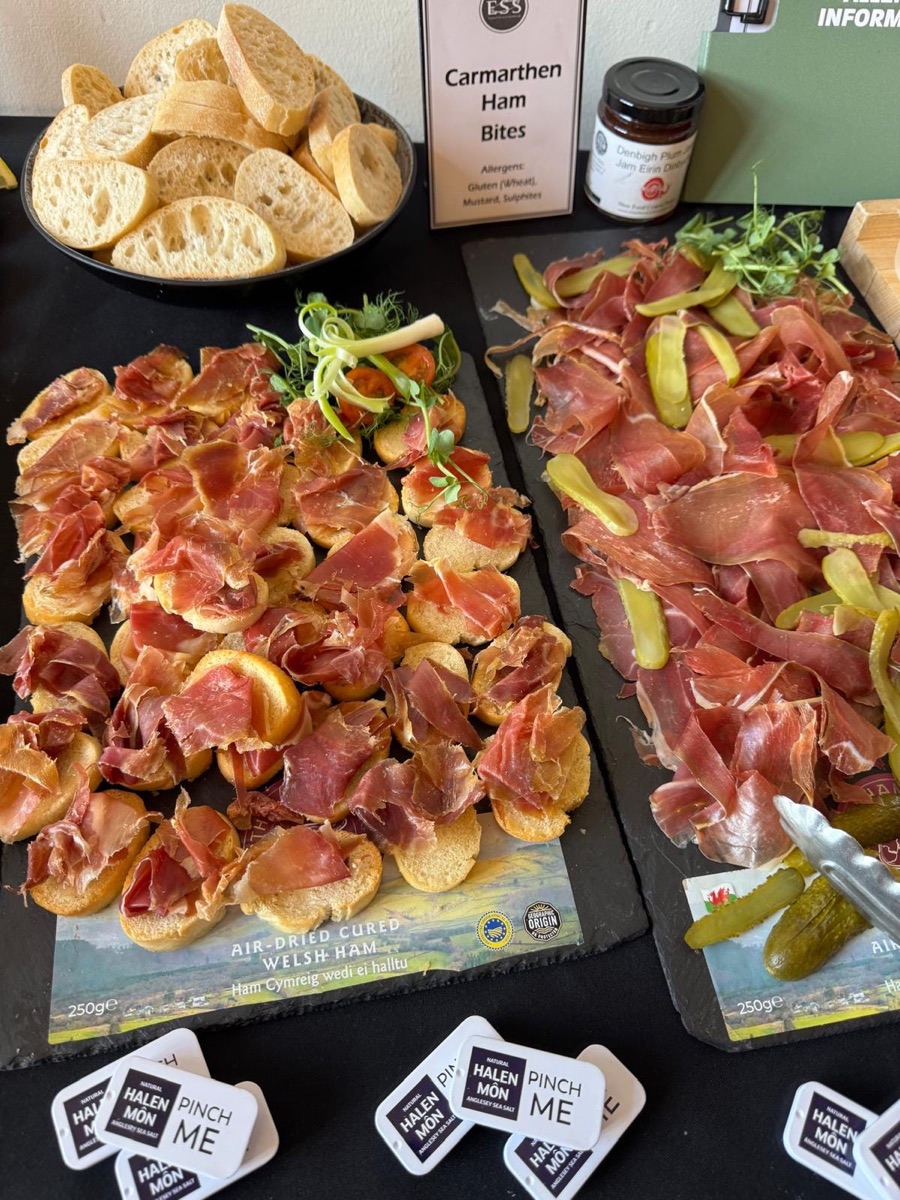
Then everyone ate. The tasting platters carried produce from Halen Môn, Wainwrights Bee Farm, Golden Road Gin and the makers of Carmarthen ham. The Cooks Alliance went down well, our volunteers kept the sign-up table busy, and the feedback from the festival and the audience was warm, in every sense.

The Hay Festival listing

29 January 2026 · Senedd, Cardiff Bay

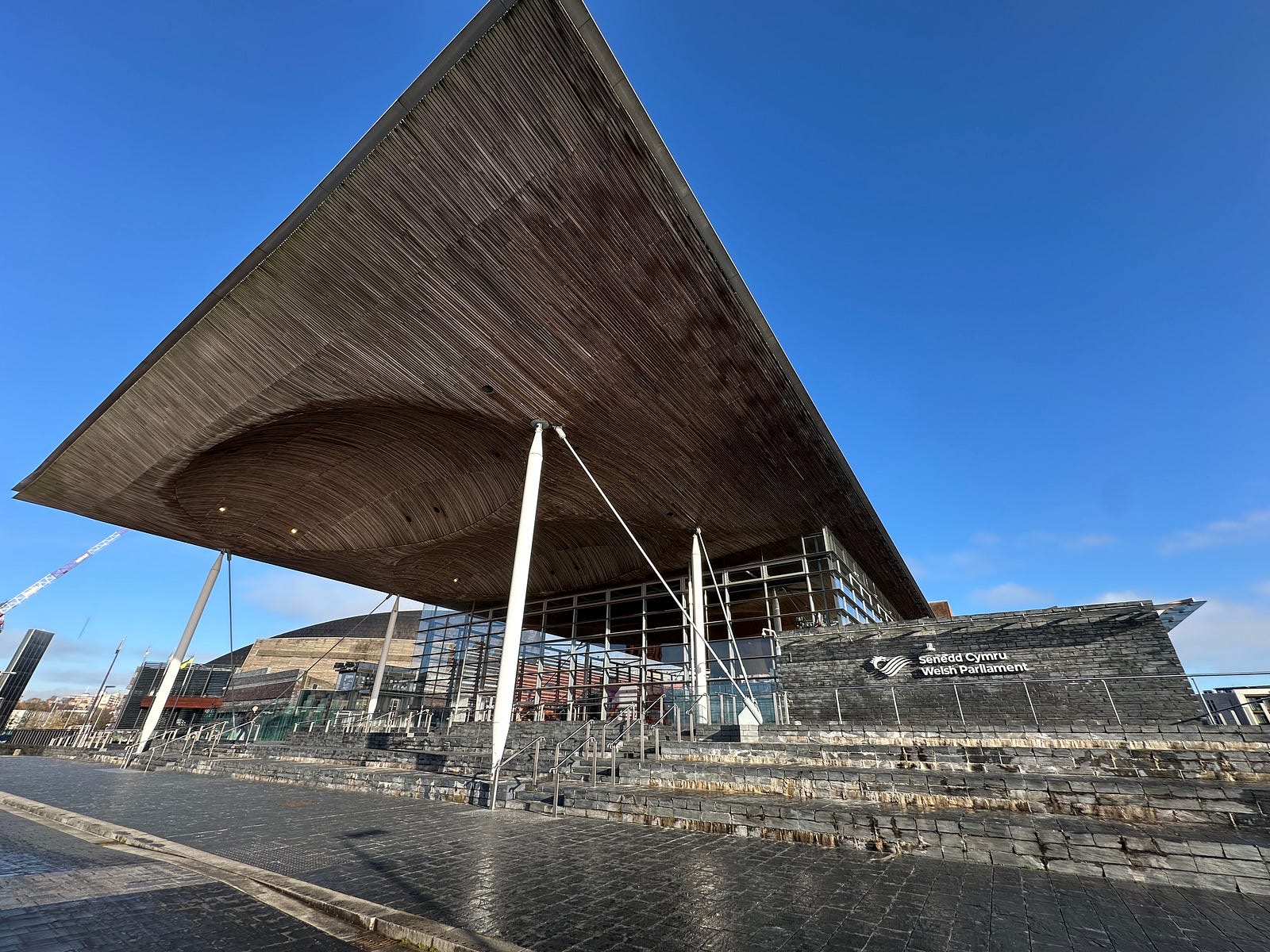
Slow Food at the Senedd

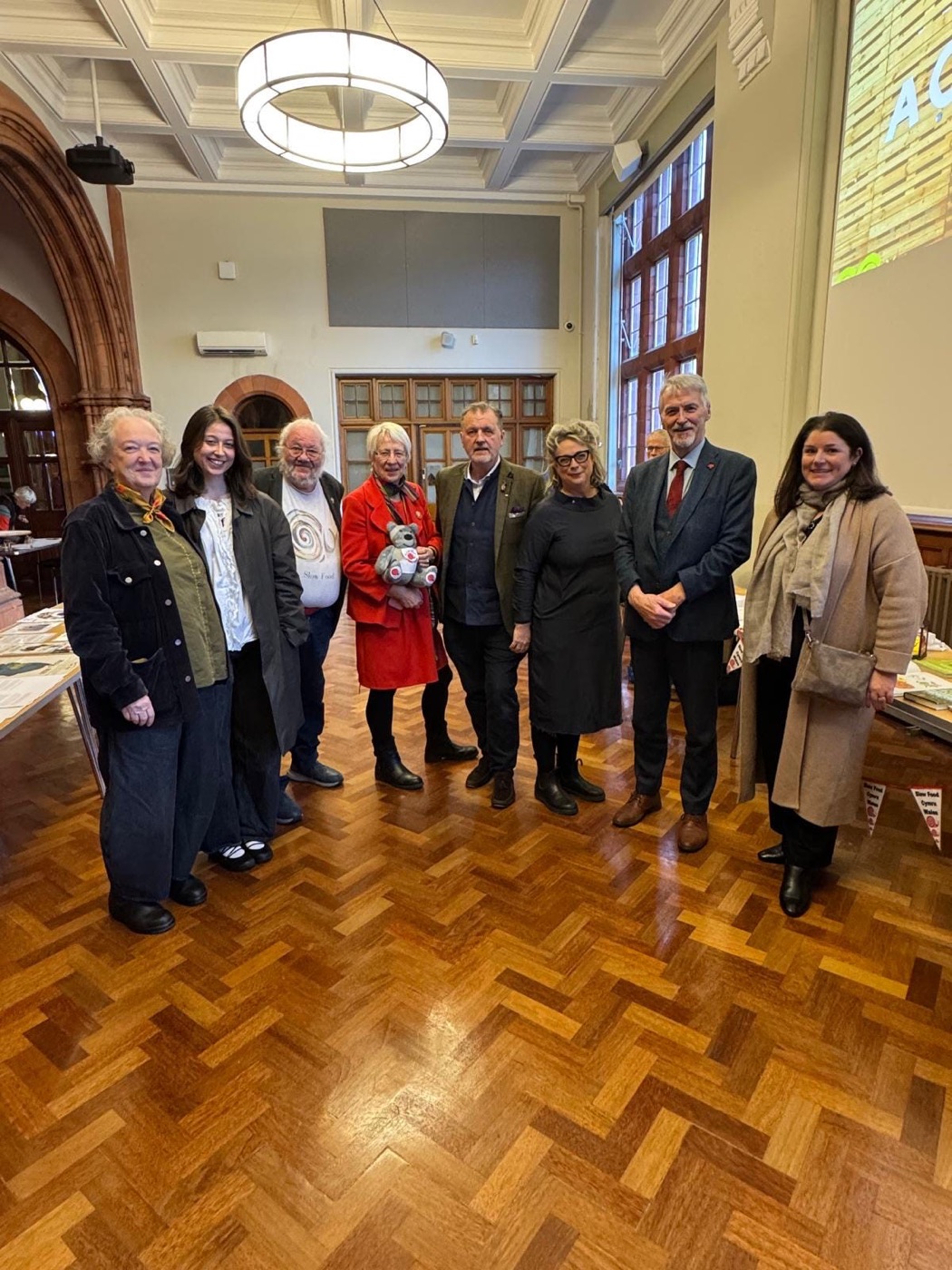
Jenny Rathbone MS invited us to present our work to Members of the Senedd and their guests. Trine Hughes set out what Slow Food stands for and how the Ark of Taste works. Alison Lea-Wilson, our secretary, spoke for the Welsh businesses who support us, and Andrew Collings asked everyone in the room to plant a heritage Welsh fruit tree on St Teilo’s Day.

Huw Irranca-Davies, Deputy First Minister and Cabinet Secretary for Climate Change and Rural Affairs, closed by backing the movement, and made the case that the Ark of Taste and Wales’s protected food names do complementary jobs.

The buffet, sponsored by Castell Howell and ESS, was a tour of the Welsh Ark: Carmarthen ham, Caerphilly cheese, Glamorgan sausage bites with Denbigh plum preserve, laverbread and cockle cakes, and Snowdon and Monmouth puddings.

Read Trine’s full account

Days like these run on members

Membership pays for the tables, the tastings and the time. Join from £2.75 a month.

Campaign 01

Time for Lunch

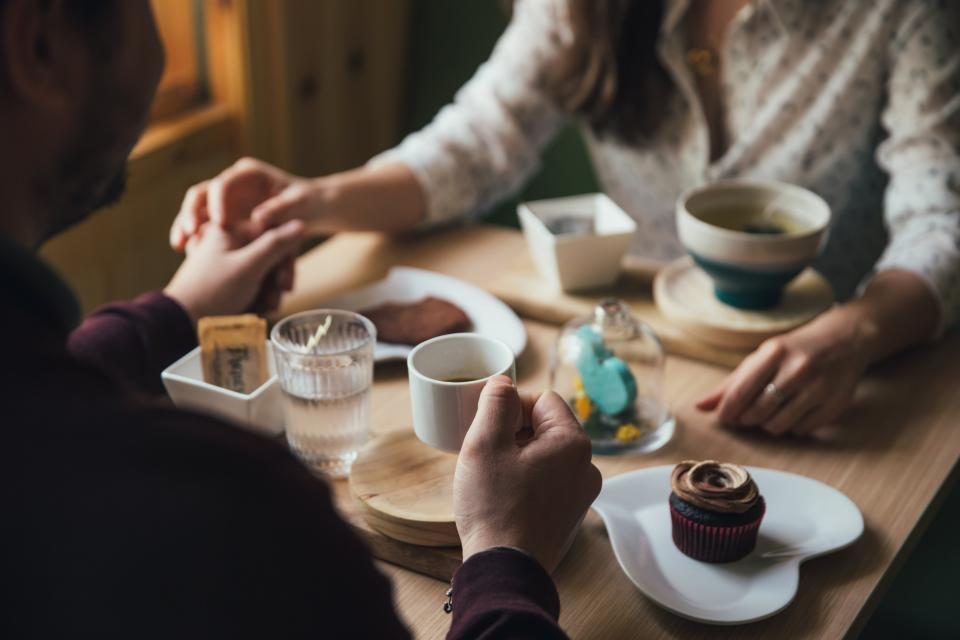
A UK-wide campaign asking us all to take time for lunch. We are encouraging everyone, on one day a week, to move away from our desks and eat lunch with a friend, a co-worker, a family member, or even just to take a moment out of the day for ourselves.

Step away from your desk, pause, and eat something you have brought from home or support a local business. Let us know what you are doing by posting and tagging us on social media.

Friends sharing coffee and cake around a table

Campaign 02

Milltir Sgwâr

The square mile. A concept with deep roots in Wales, and the frame for several years of talks, debates and shared meals.

The concept of milltir sgwâr is one with deep roots in Wales. Its literal translation is square mile, but it means more than this. We wanted to explore what milltir sgwâr meant in terms of food for the people of Wales, and we have been investigating it through a series of talks, both online and in person.

Initially our focus was to look at Welsh food culture. The food culture of Wales has changed dramatically over recent times and we wanted to explore how this has impacted the food we eat. Our speaker Dr Simon Roberts explained that in his mind the concept promotes the ideology of belonging to and being immersed in a small community. Community is key to Slow Food. Each and every one of us who is a member is involved in a local, national and international community, so we explored this during our debates.

An online forum during lockdown gave us access to speakers nationwide. We looked at how local food production and supply was seeing the biggest resurgence since the Second World War. Patrick Holden of Sustain UK pointed out that if imports were becoming harder to source, this may focus our minds on local food production, and that there could be a renaissance of Welsh fruit and vegetables as a result, which would be better for our health, our environment and our communities. Carolyn Steel, author of Sitopia, took this further, explaining that we need to look beyond the twentieth century concept of the good life. We need to look to what gives us pleasure, and that includes spending time with your family and engaging with nature.

If you missed it, you can watch it again here.

Post-Covid we looked at the cost of living crisis. We wanted to see how this was affecting the concept of local eating, and we asked what was really happening on the ground with local people and food. What transpired was a discussion around the need for food banks and community fridges. Does the former solve the problem, or merely provide a sticking plaster?

This formed the basis of our next debate, which took place at Hay-on-Wye’s world famous book festival. Here we looked at global challenges to food production and distribution, and how these can be met through local resilience and sustainability. We had an illustrious panel including Sheila Dillon, presenter of BBC Radio 4’s The Food Programme, the environmental journalist Louise Gary and Professor Bryce Evans of Liverpool Hope University, all expertly chaired by Ian Rasmussen. Key themes included rebuilding local food economies through community action, globalisation and de-globalisation, food pricing and food poverty.

That led on to our event at the Abergavenny Food Festival, where we hosted a communal meal based on the concept of the British Restaurant, of which there were 2,500 in the UK during the period around the two World Wars. With delicious produce provided by local producers and supportive businesses, we shared the meal and talked about what food and the concept of the square mile mean in today’s society.

At the end, a woman commented that for the first time in a long time she had heard people talking about what she had been advocating all her life. That food is about those you share it with. It is about pleasure as well as sustenance, and that in itself is what the milltir sgwâr is about. Trine Hughes, Chair, Slow Food Cymru Wales

So what is next? We are putting the themes that have arisen from these debates into action, hosting events across the country to encourage people to come together in their communities to eat locally, seasonally and regionally. We are working to influence government policy, and working on a UK-wide education policy to ensure all our members, and the communities they live in, have access to the skills we all need to live a rich and pleasurable life in our milltir sgwâr.

For more information or collaborative opportunities please email [email protected].

Join Us

Ymunwch â niCampaigns need people

The more members we have, the more activity we can create. Add your name to the movement in Wales.